Stacker Guides · Identifying
When Did Coins Stop Being Silver? The Cutoff Year, Country by Country
The US quit after 1964, Britain after 1946, Canada halfway through 1968. The cutoff year and the silver content for thirteen countries, why almost all of them did it in two steps, and how to check the coin in your hand.
By Joel Perkes · · 8 min read
Turn a modern quarter on its side and you’ll see a thin copper stripe around the edge. That stripe is the inside of a sandwich: copper in the middle, a nickel alloy on the outside, and no silver anywhere. Turn over a quarter from 1964 and the edge is solid silver all the way through. One of those coins is worth twenty-five cents. The other is worth about forty times that, and it is sitting in somebody’s coin jar right now, waiting for them to look.
So, when did coins stop being silver? In the United States, dimes, quarters and half dollars dated 1964 or earlier are 90% silver, and Kennedy halves stayed 40% silver through 1970. Britain and New Zealand stopped after 1946, Canada after 1968, and Australia’s last silver coin was the round 50 cents of 1966. Most of continental Europe and Mexico kept some silver coins into the late 1960s and 1970s. The table below gives the cutoff year and the silver content for thirteen countries.
The cutoff year in every country
Most countries took the silver out of their coins between the mid-1960s and 1980
Last year an everyday circulating coin held any silver.
| Country | Last silver coins | The details |
|---|---|---|
| United States | 1964 (halves 1970) | 90% to 1964; Kennedy halves 40% from 1965 to 1970; war nickels 35% from 1942 to 1945 |
| Canada | 1968 | 92.5% to 1919; 80% from 1920 to 1967; dimes and quarters 50% in 1967 and 1968 |
| United Kingdom | 1946 | 92.5% to 1919; 50% from 1920 to 1946 |
| Ireland | 1943 | 75% shilling, florin and half crown from 1928 |
| Australia | 1966 | 92.5% to the mid-1940s; 50% from 1946 to 1963 (threepence 1964); round 50 cents, 80%, in 1966 only |
| New Zealand | 1946 | 50% from 1933, when its own coins began |
| South Africa | 1968 | 80% from 1923 to 1950; 50% from 1951 to 1964; one rand 80% from 1965 to 1968 |
| Mexico | 1979 | the peso went from 90.3% to 10% between 1910 and 1967; 100 pesos 72% from 1977 to 1979 |
| Switzerland | 1969 | 83.5% francs to 1967; five francs to 1969 |
| France | 1980 | five francs 83.5% to 1969; ten francs 90% to 1973; fifty francs 90% from 1974 to 1980 |
| Germany | 1974 | 90% under the Empire to 1918; West German five marks 62.5% from 1951 to 1974 |
| Austria | 1973 | ten schilling 64% from 1957 to 1973 |
| Netherlands | 1967 | gulden and 2½ gulden 72% to 1967 |
“Last silver coins” means the last year an everyday circulating coin held silver. Commemorative and collector coins carried on long after in most of these countries, and the junk silver calculator lists them with their silver content.
Why did countries stop putting silver in coins?
Because the silver became worth more than the money. A coin works as long as the number stamped on it is worth more than the metal inside. When the metal climbs past the number, people stop spending the coin and start keeping it, and the government ends up minting coins that vanish into drawers as fast as it can make them. That is Gresham’s law: the good money gets hoarded and the bad money gets spent.
It is the same thing that happens at an office party when somebody brings real cupcakes and somebody else brings the grocery-store kind. The real ones go into napkins and coat pockets. The grocery-store ones are still on the table at five o’clock.
Almost every country made the change in two steps. First it cut the silver, usually from about 90% to half. Then, a decade or a few decades later, it took the rest out. Britain went from 92.5% to 50% in 1920 and to none in 1947. Canada went from 80% to 50% in 1967 and to none in 1968. Mexico’s peso went down the stairs one step at a time: 90.3%, 80%, 72%, 50%, 30% and finally 10%, in about fifty years.
United States: 1964
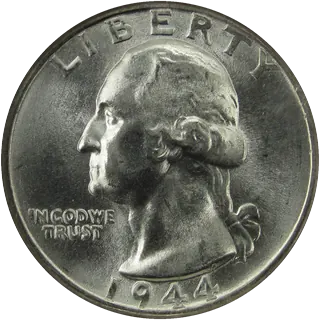
The Coinage Act of 1965, signed on July 23, 1965, removed the silver from the dime and the quarter and cut the half dollar to 40%. So every dime, quarter and half dollar dated 1964 or earlier is 90% silver, and the 1965 to 1970 Kennedy halves are 40%. After 1970 the half dollar lost its silver too.
Two exceptions catch people out. The Jefferson nickel from 1942 to 1945 is 35% silver, because nickel was needed for the war; the silver ones have a large mint mark above the building on the back. And the 1971 to 1976 Eisenhower dollars sold to collectors were 40% silver, while the ones made for circulation were not. The junk silver guide covers what all of these are worth.
Canada: 1968
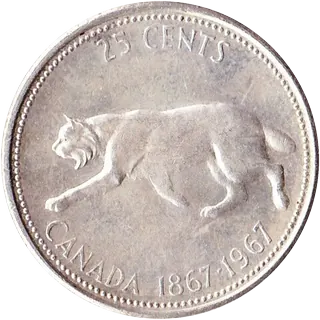
Canadian coins were sterling, 92.5% silver, to 1919 and 80% from 1920 to 1967. In 1967 the dime and quarter switched to 50% partway through the year, and in 1968 they switched again, to nickel. So a 1967 Canadian dime or quarter may be 80% or 50% silver, and the two look and weigh the same. A 1968 may be 50% silver or plain nickel. Nickel sticks to a strong magnet and silver doesn’t, which settles the 1968 question in a second. The 50-cent piece and the dollar stayed 80% through 1967.
United Kingdom: 1946
British coins were sterling silver to 1919. After the First World War the silver price jumped, and from 1920 the Royal Mint cut the silver to 50%. Then the Coinage Act 1946 replaced it with cupronickel, and every new coin was dated 1947. According to the Royal Mint Museum, the silver was needed mainly to pay back the 88 million ounces Britain had borrowed from the United States during the Second World War. That is why British collectors say “pre-47.”
The year 1920 is a trap. The Mint switched alloys as its stock of sterling ran out, so some 1920-dated coins are 92.5% and some are 50%, and they can’t be told apart by eye or by weight.
Australia, New Zealand and Ireland
Australia struck to the British standard: sterling until the mid-1940s, then 50% from 1946. Unlike Britain, it kept going. The sixpence, shilling and florin stayed 50% silver through 1963 and the threepence through 1964. Then, when Australia went decimal in 1966, it issued a round 50-cent coin that was 80% silver. The silver in it was soon worth more than 50 cents, and it lasted one year.
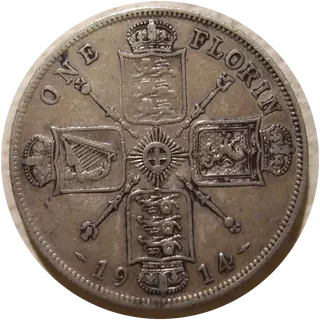
New Zealand only began making its own coins in 1933, at 50% silver from the start, and stopped after 1946. A sterling coin found in New Zealand is a British one. Ireland’s shilling, florin and half crown were 75% silver from 1928; the last were dated 1943, and a 1943 florin or half crown is rare enough that its silver is the least interesting thing about it.
Mexico and continental Europe
Mexico is the place where the date matters most, because one coin, the peso, went through six silver standards in about fifty years. Mexico also kept silver in circulation longer than almost anyone: the 100-peso Morelos coin of 1977 to 1979 is 72% silver.
In Europe, Switzerland’s francs stayed 83.5% silver to 1967, the same alloy France used for its five francs to 1969. France then issued 90% silver ten and fifty franc coins into 1980. West Germany’s five-mark piece was 62.5% silver to 1974, Austria’s ten schilling 64% to 1973, and the Dutch gulden 72% to 1967.
Into the weeds: the dates the trade uses
Collectors and dealers shorten the cutoffs into nicknames: “junk silver” or “pre-65” in the US, “pre-47” in Britain, “pre-46” in Australia (for the sterling coins) and “pre-68” in Canada. They mean the same thing in different accents: the last year the coins were worth their metal. In each country the calculator’s coin table gives the weight and fineness for every coin, and the sources it was checked against.
How to tell if your coin is silver
- Read the date and compare it with the table above. This settles most coins.
- Look at the edge. Silver is solid gray all the way through. A copper stripe means a clad coin with no silver.
- Try a magnet on a coin from a switch year. Silver isn’t magnetic. Nickel is, which matters for Canada in 1968.
- Weigh it if you’re still not sure, and compare with the specification. A US silver quarter weighs 6.25 grams; a clad one weighs 5.67.
The Is my coin silver? checker does the first step for any date and denomination, and the real silver guide covers the rest of the tests.
The fair objection
It is reasonable to say the governments had little choice. When the metal in a coin is worth more than its face, the coin disappears from circulation, and a country needs coins that people will actually spend. The US Mint has the same problem in reverse: in 2024 a penny cost 3.69 cents to make and a nickel 13.78 cents. Taking silver out of coins was a sensible response to a rising silver price, not a plot.
That is true, and it is also the point. The silver price kept rising because the currency kept falling, and the coins were the first place it showed. Every country in that table changed its coins for the same reason, within a few decades of each other, and in every one of them the old silver coins are now worth many times what is stamped on them.
Back to the coin jar
The quarter with the copper stripe and the quarter without it were both worth twenty-five cents the day they were made. One of them stayed twenty-five cents. The other one held on to what it was made of, which turned out to be the part that kept its value.
Sources
- Every country’s coins, dates, weights and fineness: the coin table in this site’s junk silver calculator, each row checked on Numista and a second source on September 24 and 28, 2026, with the sources listed there.
- United States: Wikipedia, Coinage Act of 1965 (signed July 23, 1965); Kennedy halves at 40% from 1965 to 1970: Wikipedia, Kennedy half dollar; war nickels: Wikipedia, Jefferson nickel.
- United Kingdom: the Coinage Act 1946, the 1947 date on the first cupronickel coins and the 88 million ounces owed to the United States: Royal Mint Museum.
- US Mint cost of a penny (3.69 cents) and a nickel (13.78 cents) in fiscal 2024: CoinNews, from the Mint’s annual report.
Figures read October 17, 2026. The “last silver coins” year for each country is ours, read from the coin table: the last year an everyday circulating coin in that country held silver.
Questions people actually ask
What year did US coins stop being silver?
Dimes, quarters and half dollars dated 1964 or earlier are 90% silver. The Coinage Act of 1965 removed silver from the dime and quarter and cut the half dollar to 40%, which it stayed through 1970.
What year did quarters stop being silver?
US quarters stopped being silver after 1964. A 1964 or earlier quarter is 90% silver and weighs 6.25 grams; a 1965 or later quarter is copper and nickel, weighs 5.67 grams and shows a copper stripe on its edge.
Are 1965 to 1970 half dollars silver?
Yes, partly. Kennedy half dollars dated 1965 to 1970 are 40% silver. Those dated 1964 are 90% silver, and those from 1971 on contain none, apart from special collector issues.
What year did Canadian coins stop being silver?
Canadian dimes and quarters were 80% silver to 1967, switched to 50% during 1967, and to nickel during 1968. The 50-cent piece and the dollar stayed 80% silver through 1967. Before 1920, Canadian silver coins were 92.5%.
What year did British coins stop being silver?
British coins were 92.5% silver to 1919 and 50% silver from 1920 to 1946. From 1947 they were cupronickel, which is why collectors call the older coins pre-47 silver. Some 1920 coins are 92.5% and some 50%.
What year did Australian coins stop being silver?
Australian sixpences, shillings and florins were sterling to the mid-1940s and 50% silver from 1946 to 1963, and the threepence to 1964. The round 50-cent coin of 1966 is 80% silver and was made for one year only.
Are old Mexican pesos silver?
Many are, but the date decides how much. The Mexican peso went from 90.3% silver in 1910 to 10% by 1957 to 1967, through 80%, 72%, 50% and 30% in between. The 100-peso coins of 1977 to 1979 are 72% silver.
Why did countries stop making silver coins?
Because the silver became worth more than the face value. When that happens, people keep the coins instead of spending them, so governments cut the silver and then removed it. Most did it in two steps over a few decades.
How can I tell if a coin is silver?
Check the date against the cutoff for its country, then look at the edge: solid gray means silver, a copper stripe means clad. Silver isn't magnetic, and a silver coin weighs a little more than its clad replacement.