Stacker Guides · Buying
Why Do Gold and Silver Cost More Than the Spot Price?
Spot is the price of the coffee beans. You are buying the latte. Where every dollar of the premium goes, why silver's runs so much higher than gold's, and what the cheapest buyers actually paid in 2026.
By Joel Perkes · · 8 min read
Nobody has ever bought a latte at the price of coffee beans. The beans are in there, somewhere under the foam, but the cup, the milk, the rent and the person who wrote your name wrong on the side all get paid first. Silver works the same way, except the person at the counter spells your name correctly and charges you for it anyway.
So, why do gold and silver cost more than spot? The spot price is a wholesale price for large bars of metal traded between banks and big dealers. A coin or small bar has to be refined, struck, packed, shipped, insured and sold, and every step adds a cost. That extra is the premium. Silver’s premium is higher than gold’s, in percentage terms, because making and moving a coin costs about the same whichever metal it is made of, and silver is worth far less per ounce. In 2026 the cheapest one-ounce gold coins have averaged about 0.5% to 4% over spot, and one-ounce silver coins at about 2% to 14% over it.
What is the spot price, exactly?
The spot price is the price for metal delivered now, in large wholesale bars, between parties who trade it by the truckload. The number you see on a dealer’s website is usually derived from the most actively traded gold or silver futures contract on COMEX, the New York exchange, and updates every few seconds. London has a separate benchmark, the LBMA Gold Price, set by auction twice each business day (silver gets one auction a day).
The bars behind those prices are not what most people buy. A London good delivery gold bar holds roughly 400 troy ounces, and a COMEX silver contract is 5,000 ounces. Spot is the price of the metal in that form, with no packaging, no design and no delivery to your porch. Everything smaller costs more, in the same way a 50-pound sack of flour costs less per pound than a box of cupcakes.
Where does the premium go?
Follow a Silver Eagle from the mine to your hand and the premium splits into pieces:
- The mint. The US Mint doesn’t sell bullion coins to the public. It sells them to a short list of wholesalers called authorized purchasers, at spot plus a fixed charge per coin. In July 2024 that charge for a Silver Eagle rose from $2.95 to $3.05, according to FindBullionPrices.
- The wholesaler. The authorized purchaser adds its own margin and sells to dealers.
- The dealer. Rent, staff, insurance, the cost of holding stock whose price moves every few seconds, and a profit.
- Getting it to you. Shipping and insurance, which for silver are not small, because silver is heavy for its value.
- How you pay. Many dealers list a cheaper price for a check or bank wire than for a credit card, because the card company takes a fee from the dealer.
- Tax, in some places. Some US states charge sales tax on bullion and many exempt it. Outside the US, the rules split gold from silver (below).
None of that is a scam. It is the same chain that turns a cow into a hamburger, and nobody expects the hamburger to cost the price of beef on the hoof.
Why is the premium on silver so much higher than on gold?
Because the cost of making and moving a coin is mostly fixed per coin, and silver is cheap per ounce. Order a $9 phone case and a $1,200 phone from the same store. The box, the truck and the driver who throws it at your front door cost the same for both. On the phone, delivery is a rounding error. On the case, delivery might cost more than the case.
Run the numbers with a made-up example: silver at $60 an ounce and gold at $4,200, and a $3 cost to make and wholesale each one-ounce coin. On the silver coin, $3 is 5% of the metal. On the gold coin, it is 0.07%. Same mint, same packing, very different percentages.
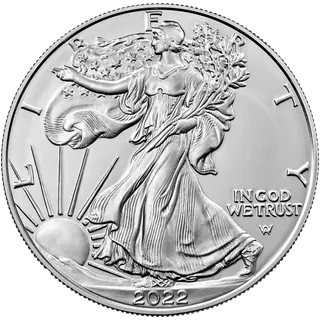
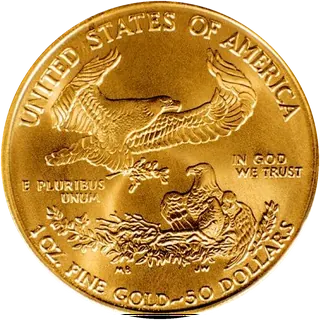
Weight makes it worse. At those prices, $10,000 buys about 167 troy ounces of silver, which weighs about 11.4 pounds, or 2.4 ounces of gold, which weighs a little less than a deck of cards. One of those parcels needs a heavy box and a bigger insurance bill. The other could ride to your house in an envelope, and the shipper charges accordingly.
Into the weeds: why some gold coins cost a percentage, not a flat fee
Mints and dealers often price gold as a percentage over spot and silver as a dollar amount per coin. That is a hint about which costs matter for each. For silver the fixed cost of the coin dominates, so a flat charge per coin tracks it. For gold the fixed cost is small next to the value of the metal, and the costs that do matter (financing stock, insurance, the risk of the price moving while the coin sits on a shelf) all grow with the price, so a percentage tracks them better.
How much over spot do people actually pay?
The price-comparison site FindBullionPrices records the lowest dealer price it can find each day and turns it into a premium over spot. Its monthly averages from June 2025 to October 2026 give a fair picture of the cheapest end of the market:
| Product | Lowest month | Highest month |
|---|---|---|
| 100 oz silver bar | −0.86% September 2026 | 3.53% February 2026 |
| 1 oz generic silver round | −0.47% September 2026 | 5.28% February 2026 |
| 1 oz Silver Eagle, random year | 1.98% May and June 2026 | 14.23% February 2026 |
| 1 oz Gold Eagle, random year | 0.56% September 2026 | 3.75% October 2025 |
Silver Eagles carry the widest premiums, and big bars sometimes sell below spot
Lowest and highest monthly average of the cheapest dealer price over spot, June 2025 to October 2026.
Two things stand out. The first is the gap between a plain silver round and a Silver Eagle. The silver is the same; the Eagle carries a government guarantee, a famous design and a face value, and buyers pay several percent for that. The second is the minus signs. A bar or round listed below spot is someone selling in a hurry, usually on a marketplace, usually before shipping. It is real, and it is the bottom of the bargain bin, not the price at a local shop.
Size matters as well. The smaller the piece, the higher the premium per ounce, because a tenth-ounce gold coin needs the same blank, strike, inspection and plastic as a one-ounce coin. Fractional gold coins routinely carry premiums several times higher than the one-ounce version.
Why do premiums jump?
Mints can only strike so many coins a day, and dealers can only hold so much stock. When everyone wants silver at once, the metal is still out there in big bars, but the coins are not, and the premium is where the waiting line shows up. During the buying rush of 2021 and 2022, FindBullionPrices recorded Silver Eagle premiums of more than 50%. In February 2026 the cheapest random-year Eagles averaged 14.23% over spot; by May they were under 2%.
It is the concert ticket problem. The band costs the same to see on Tuesday as on the night everyone found out they were breaking up. The ticket does not.
Is there tax on top of spot outside the US?
In several countries, yes, and the rules treat gold kindly and silver less so.
| Where | Gold | Silver |
|---|---|---|
| United Kingdom | No VAT on investment gold: bars of 99.5% or better and qualifying coins | 20% VAT |
| European Union | No VAT on investment gold since 2000 | VAT at each country’s rate |
| Canada | No GST/HST on bars and coins of 99.5% or better | No GST/HST at 99.9% or better |
| Australia | No GST on investment-form gold of 99.5% or better | No GST on investment-form silver of 99.9% or better |
A British buyer paying 20% VAT on silver starts every purchase 20% behind spot before the dealer has added a penny, which is why so many UK stackers buy gold or store silver abroad. In the US, sales tax is a state matter, and the rule changes at the state line.
Do you get the premium back when you sell?
Usually only part of it. Dealers quote two prices, what they sell at and what they buy at, and the gap between them is the spread. The premium you paid is most of what you lose on a quick round trip. Popular government coins tend to fetch the best buy-back prices, which is part of what the higher premium on an Eagle or a Maple Leaf buys. Proof coins, graded coins and anything sold as “limited” often carry premiums that no buyer will repay; those are priced as collectibles, not metal.
The premium calculator turns any quote into a premium over spot, and adds up what buying and selling back would cost.
The case against paying any premium
It is fair to say it plainly: a premium is a cost. A plain bar bought close to spot holds the same silver as a coin bought at 14% over, and if both are sold to a dealer at the same price per ounce, the bar wins. Buyers who pay up are buying recognizability, a mint’s guarantee of weight and purity, and an easier sale later. Whether that is worth a few percent is a judgment, and plenty of stackers make it in different directions.
How to tell if a premium is fair
- Turn the price into a premium: (price − spot value of the metal) ÷ spot value.
- Compare like with like. A one-ounce bar against other one-ounce bars, an Eagle against other Eagles.
- Add shipping, insurance, card fees and any tax before comparing, because a low price with a $25 shipping charge is not a low price.
- Check the dealer’s buy-back price for the same item. The spread tells you the real cost of the round trip.
For junk silver, which is quoted by face value, the junk silver guide shows how to turn a price per dollar into a price per ounce. And for anything that seems too cheap, the real silver guide is the next page to read.
Back to the latte
The premium is what it costs to turn metal you can’t hold into metal you can: struck, counted and sitting in your hand, with nobody else’s promise attached. Spot is the price of the beans. The premium is the cup, and nobody has yet found a way to drink coffee without one.
Sources
- US Mint charge to authorized purchasers for Silver Eagles, raised from $2.95 to $3.05 per coin over spot in July 2024: FindBullionPrices.
- Monthly average lowest premiums, June 2025 to October 2026 (October partial): 100 oz silver bars, 1 oz generic silver rounds, Silver Eagles, random year, Gold Eagles, random year. Silver Eagle premiums above 50% in 2021 and 2022: FindBullionPrices. All measure the lowest listed price over the spot value of the metal, before shipping.
- London benchmark auctions: Wikipedia, LBMA Gold Price and LBMA Silver Price.
- UK: investment gold (bars of at least 995 fineness, and coins of at least 900 fineness minted after 1800, legal tender, usually sold for no more than 180% of their gold value) is exempt from VAT; other metals are taxed at the standard rate: HMRC VAT Notice 701/21 and 701/21A.
- EU: the special scheme for investment gold, Articles 344 to 356 of Council Directive 2006/112/EC, carried over from Directive 98/80/EC, in force since January 1, 2000.
- Canada: “precious metal” (bars, ingots, coins and wafers of gold or platinum at 99.5% and silver at 99.9%) under the Excise Tax Act, section 123(1), and its zero-rating in Schedule VI, Part IX: Justice Laws, Excise Tax Act.
- Australia: precious metal in investment form (gold 99.5%, silver 99.9%, platinum 99%), first supply after refining GST-free and later supplies input taxed: ATO, GSTR 2003/10.
Figures read October 17, 2026. Worked out by us, with made-up prices of $60 silver and $4,200 gold: a $3 coin cost is 5% of an ounce of silver and 0.07% of an ounce of gold; $10,000 buys about 167 troy ounces of silver (about 11.4 pounds) or about 2.4 ounces of gold (about 74 grams).
Questions people actually ask
Why is silver more than the spot price?
The spot price is the wholesale price of large bars traded between banks and big dealers. A coin or small bar has to be minted, wholesaled, sold by a dealer and shipped, and each step adds a cost. That extra is the premium over spot.
Why are silver premiums higher than gold premiums?
Making and moving a one-ounce coin costs about the same for either metal, and silver is worth far less per ounce. A $3 cost is 5% of a $60 ounce of silver but 0.07% of a $4,200 ounce of gold. Silver is also heavier to ship for the same dollar value.
What is a normal premium over spot for silver?
From June 2025 to October 2026, the lowest dealer prices tracked by FindBullionPrices averaged between 1.98% and 14.23% over spot each month for random-year Silver Eagles, and between -0.86% and 3.53% for 100 oz silver bars. Local shops and small orders usually cost more, and shipping is extra.
What is a normal premium over spot for gold?
From June 2025 to October 2026, the lowest dealer prices tracked by FindBullionPrices for random-year one-ounce Gold Eagles averaged between 0.56% and 3.75% over spot each month. Fractional gold coins carry much higher premiums per ounce.
How is the spot price of gold and silver set?
Retail spot prices are usually derived from the most actively traded gold or silver futures contract on COMEX in New York and update every few seconds. London sets a separate benchmark by auction, twice a day for gold and once a day for silver.
Can you buy silver at spot price?
Rarely. Spot is the price of metal in large wholesale bars. Plain bars and rounds sometimes sell close to spot, or even slightly below it when someone is selling in a hurry, but coins nearly always cost more, and shipping and payment fees come on top.
Why do premiums go up when the price goes up?
Mints and dealers can only produce and stock so many coins. When many people buy at once, the coins run short even though the metal exists in large bars, and the premium rises. FindBullionPrices recorded Silver Eagle premiums of more than 50% during the rush of 2021 and 2022.
Do you get the premium back when you sell?
Usually only part of it. Dealers buy for less than they sell, and the difference, the spread, is most of the cost of a quick round trip. Well-known government coins tend to get the best buy-back prices, while proof, graded and limited-edition coins often carry premiums no buyer will repay.
Is there VAT or sales tax on gold and silver?
In the UK, investment gold has no VAT and silver carries 20%. In the EU, investment gold is VAT-free and silver pays each country's VAT. Canada charges no GST/HST on gold of 99.5% or silver of 99.9% purity, and Australia charges no GST on investment-form gold and silver of those purities. In the US, sales tax on bullion depends on the state.